
Llanchama
Connecting with the sagrado

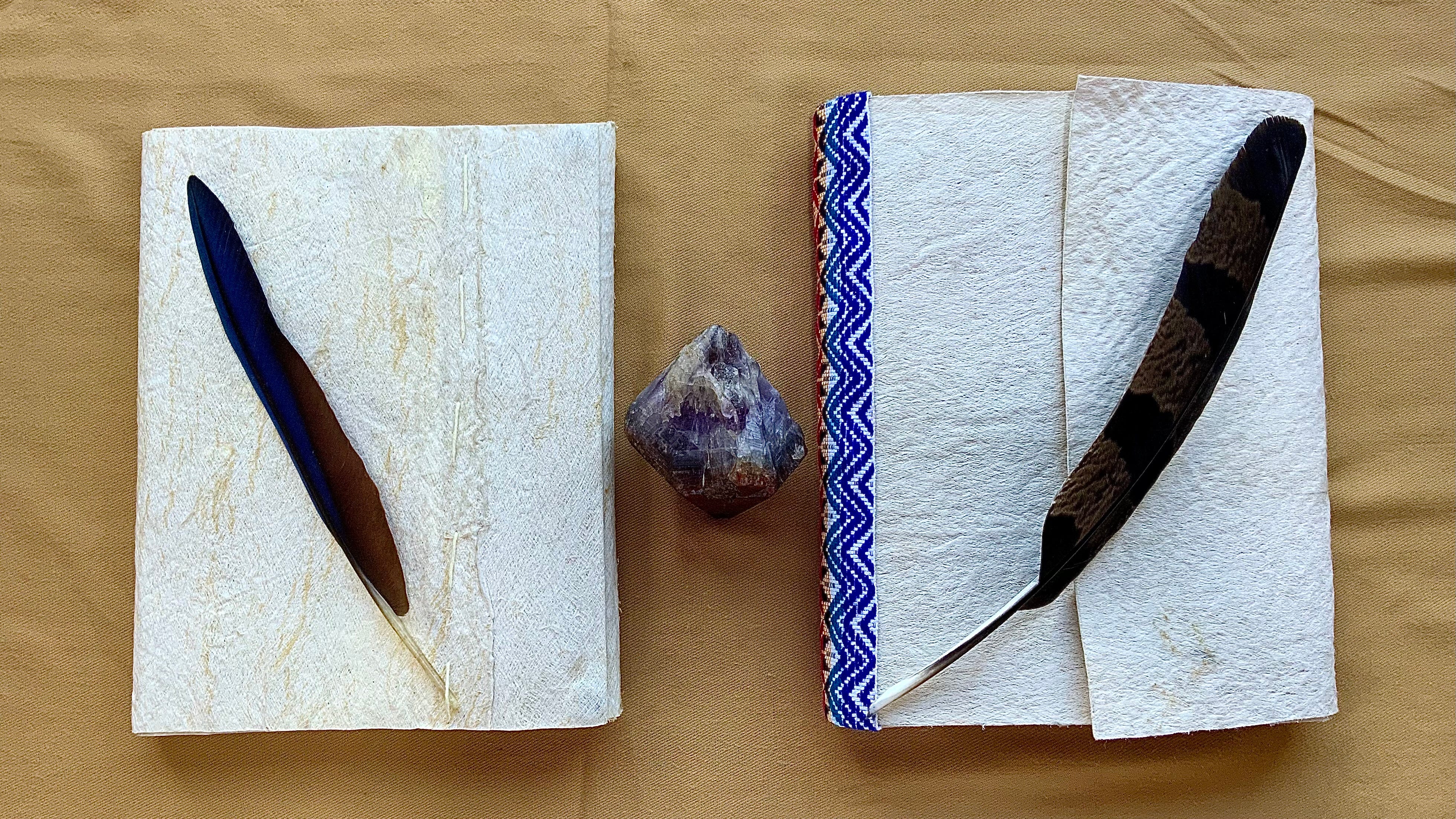
Two llanchama journals I made by hand along with handmade quill pens. June 2026.
Llanchama ~ Canvas of the Forest
“Among the most distinctive Materials of Amazonian Indigenous Arts Llanchama, the inner bark of the Uvilla tree (Pourouma cecropiifolia). Once harvested, beaten, and softened, it becomes a fibrous cloth, water-resistant and supple, often likened to felt or handmade paper. Today, it serves as a living canvas for painting, carrying the texture of the forest into each work of art.” ~ Anturion Gallery
A New Love
In my time in the Amazon Rainforest, one material has caught my eye, my attention, and my creativity more than any other~ the sacred natural bark fiber llanchama. As soon as I touched it, I knew it was special, something I felt called to work with and share.
I’ve hunted for it throughout the hot streets of Iquitos, and when that failed, I went straight to the source to find it. I’ve written on it, ironed it (yes, sometimes to get wrinkles out of a tree, you simply iron it), I’ve made scrolls with it, and now, I’m making my newest and most exciting product: handmade journals.
These journals have beautiful, thin pages of llanchama that I’ve sized at A4, bound inside covers made of a thicker, sturdier yield of the bark. I iron every single sheet, cut every page, hand~stitch every cover, and tend to the whole thing with the utmost respect and reverence for the process. To me, smoothing out the rough and supple bark-fiber mirrors the act of journaling itself~ taking the wrinkled, chaotic thoughts of our days and gently flattening them into a space of peace.
I am delighted to be working with this material, and I wanted to pause, sit down, and explain the material, the process, the culture, and my journey to find it. Here’s that story for you.
If you would like to gift me a coffee, you may do so here.
The process of making llanchama journals.
The Great Cultural Journey
Llanchama is a strange, beautiful hybrid– a fabric/paper/bark material made from the inner bark of the Poulsenia armataand/or Pourouma cecropiifolia tree. Traditionally, the indigenous Bora people use it for ceremonial clothing, painting it with natural Amazonian colors to display symbols of protection and strength. The idea is that when you have the skin of the sacred tree in communion with your skin, you are connecting more fully into the depths, mysteries, and power of the Amazon rainforest~ no longer separate, but integrated fully with this raw primordial energy.
The process of finding the sacred tree, cutting it down, removing the fiber, pounding it flat, washing, and then stretching the material into sheets is a grueling, multi~day ordeal. Simply pounding the llanchama into a uniform flat sheet takes about ten hours of constant, exhausting attention. It is labor~intensive, requires an archaic dying, highly specific skillset, and demands that you harvest a sacred tree you first have to actually track down in the dense jungle.
As someone who writes constantly, I am always looking for ways to elevate the experience. From journaling to jotting~ poetry to story writing~ I am always placing pen on page to enjoy the tactile dance of it. When I started using fountain pens instead of ballpoints, paper became the next thing to upgrade (a good fountain pen will simply bleed right through generic, thin paper). I’ve used parchment and vellum; I’ve used high~end brands like Tomoe River and Midori.
But now that I am here in the heart of the Amazon, llanchama paper has simply drawn me in. It forced a beautiful trade: swapping my premade inks for the ability to press my own from Amazonian fruits, trading fountain pens for brushes, and exchanging mass~produced journals in favor of creating my own from scratch with materials that I honor and value.
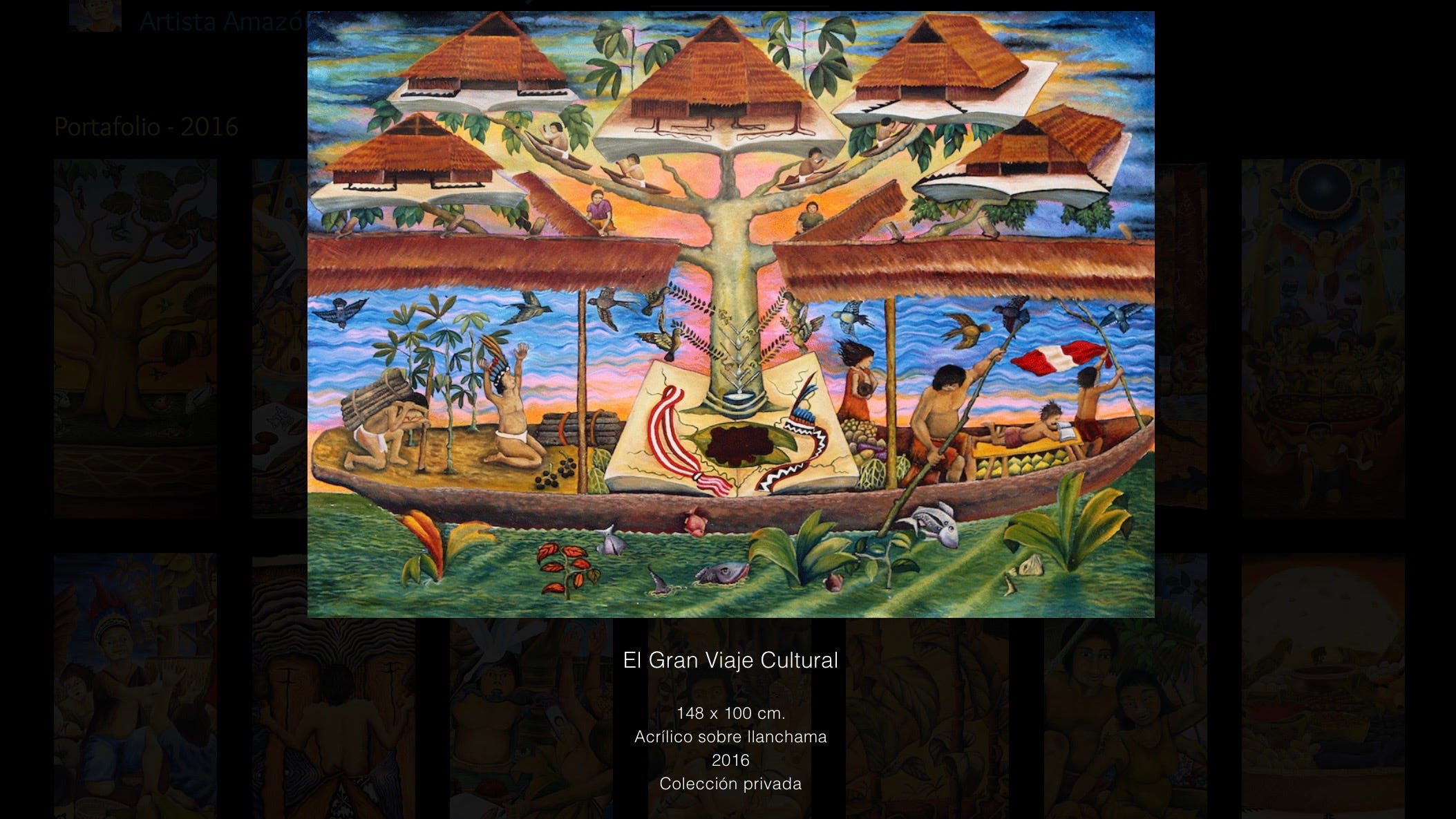
“The Great Cultural Journey” by Brus Rubio, painted on llanchama. 2016.
Returning to the Root
I first discovered this paper/bark/fabric/material in Centro Artesanal Anaconda, in Iquitos. I walked into an artist’s stall and saw all these incredible creations made from an interesting material that felt so nice to touch. Soft like velvet, but sturdier, like thick construction paper, yet quick to remove creases. In the stall there were bags, shoes, hats, purses, and wallets all made from it.
The owner of the store, Don Virgilio, greeted me warmly when I picked up a llanchama sombrero that reminded me of a Panama hat. When I tried it on, it unfortunately did not fit my head. The owner asked me if I would like him to make me one. I said that I would. He measured my head, got out a large, solitary sheet of llanchama paper, and told me to return the next day.
I returned the next day to a beautiful hat made in the exact same style, but it simply fit my head. I thanked Virgilio and left.
I then went to see a few new friends of mine who were doing an “artist in residence” program at the BQC hostel in Iquitos. Being within their creative energy, I was struck by a sudden realization: perhaps this hat and its material would be nice to paint. So that evening, I put down a few designs on my hat using a natural Amazonian liquid dye and medicine called Sangre de Drago (Dragon’s Blood). It’s a deep~red, viscous latex that oozes like a wound from the bark of the Croton lechleri tree.
Once I saw that the paper took the coloring beautifully, my sights focused. My heat ignited and I began a relentless hunt for full sheets of llanchama.
The process of making llanchama.
Searching in the Doorway
Originally, I wanted to use the paper to write poetry on. Similar to an ancient papyrus scroll, the llanchama could act as a vehicle to transfer spiritual poetry to others. Since the tree and fiber are sacred to the Bora people~ they paint spiritual images on it to represent maps of the unseen world~ I wanted to find a beautiful bridge for my own writings. I decided this was the route I wanted to go.
Unfortunately, finding llanchama in Iquitos~ the doorway to the Amazon~ proved to be much more difficult than I had planned. Virgilio only had that single large page he used for my hat, and he explained that a trader only came through Iquitos every few months to sell more from the native communities. I tried all of the other thirty vendors at Anaconda that day. None of them had any.
I went to other artisanal locations around Iquitos and had very little luck. Most people who had any llanchama had dismal quality~ holes in the llanchama were numerous, and the thickness varied wildly throughout the sheet. There was one woman who had a single clean, usable sheet in one location. There was another man across town who had another. But after days of searching, I was only able to find those two serviceable sheets of llanchama.
Everywhere I looked, everyone I asked for directions and clues always pointed me to one single location. Pebas~ Tierra de Amor. The Land of Love. So eventually, I bought my boat ticket and left the doorway of the Amazon behind.
If you would like to gift me a coffee, you may do so here.
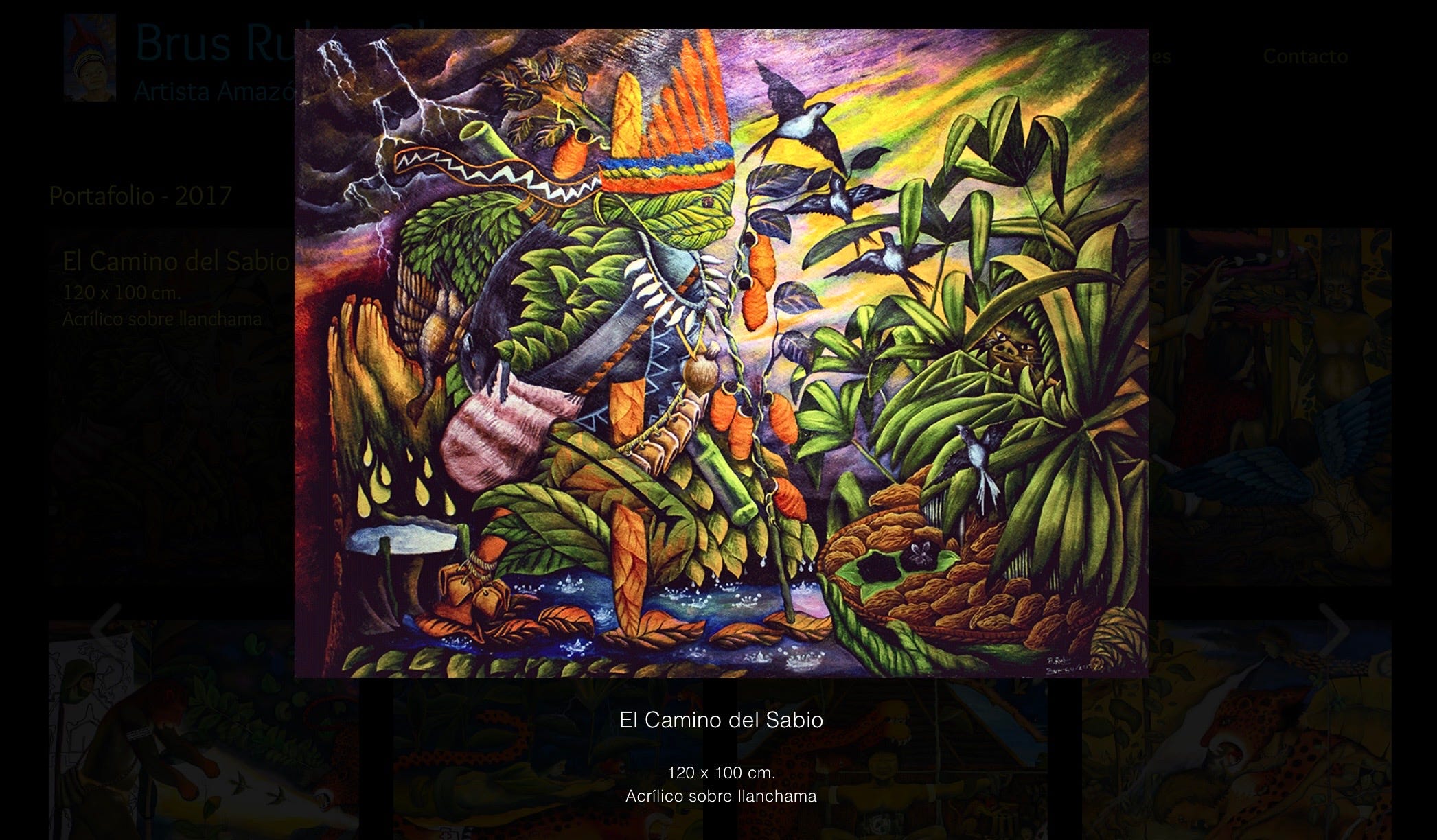
“The Way of Knowledge” by Brus Rubio, painted on llanchama.
The Land of Love
After a seven~hour boat ride (this is the fast boat, mind you– the slow boat would get you there in days rather than hours), I ended up in Pebas. Arriving at 10:00 PM at the dock of this small town of roughly 4,000 inhabitants was quite lucky because after I found a hostel, “El Amigo,” to stay at, the owner, Percy, let me know that the town’s electricity was turned off promptly at 11:00 PM.
Fast boats are interesting. Loud. Max capacity of 107. They’re like thin, metallic fish that glide precariously on top of the water.
The next morning, I walked back to the heart of town to begin searching for llanchama. When I arrived, I was semi~alarmed to see uniformed soldiers walking through the Land of Love with machine guns dangling from their shoulders. None of the locals, however, seemed alarmed at all. In fact, apart from the menacing machine guns, most of the soldiers held an ice cream cone or a cold papaya smoothie to handle the oppressive heat of the morning. I would come to find out that there is a military base in Pebas and the military was quite welcome~ it seemed to keep the place peaceful.
While talking to the locals of the area, they told me that it would be difficult to find llanchama in Pebas itself. Instead, I would have to travel deep into the territory of the Bora people to find their native fabric and the artisans who still made it. After a morning of fruitless searching, that seemed to be the universal answer.
Since I was already in the town square and people were staring at me anyway, I decided to pull out my ten-stringed ronroco and play some music, to the delight of curious rogue children and politely interested townsfolk. One older man came to join, clap his hands, and encourage the children to dance~ Don Orlando. I told him my plans to go to Boras to get llanchama, and he informed me the bridge going there was bad and that maybe it would be best to take a boat.
I considered his words, but eventually, I asked a local tuk~tuk driver (a motorcycle attached to a passenger carriage) if he would be interested in driving me to Boras to search for this sacred paper. After a quick negotiation, we left the Land of Love for the remote village of Boras.
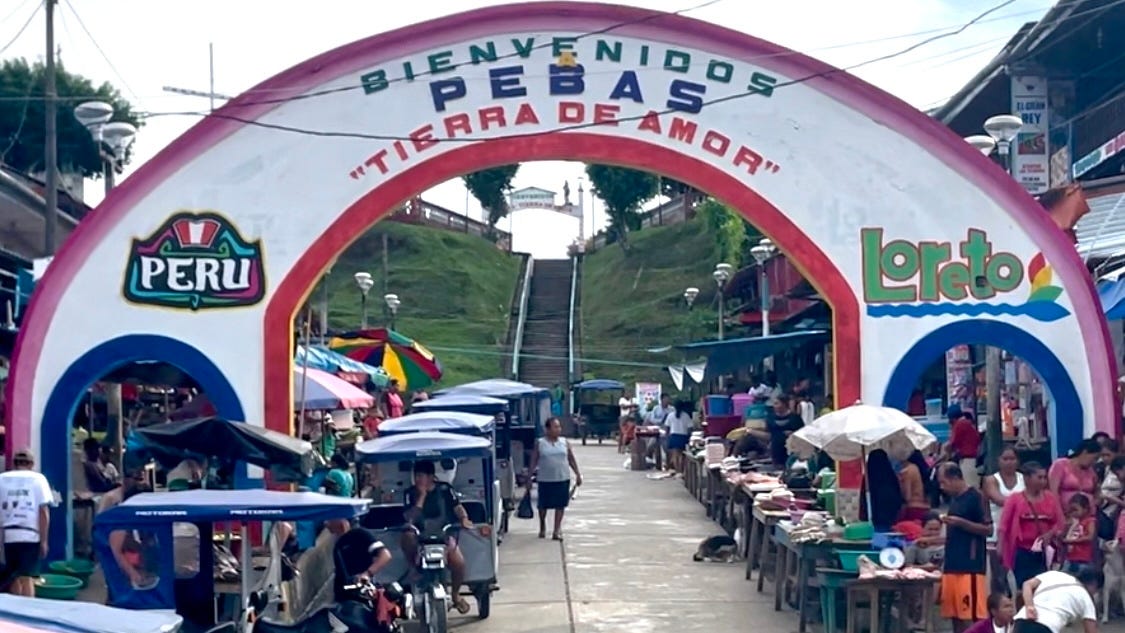
The town center of Pebas, Peru. Photo taken on June 5th, 2026.
Traversing Ancient Bridges
The road to Boras was wild. It was unlike any road I had ever traveled. To start with, the road was a single concrete lane about the width and height of a standard sidewalk. If another vehicle was driving the other way, it essentially turned into a very civilized game of chicken to see who would get off into the brush and let the other pass. It went right through neighborhoods, wiggled tightly around massive trees, and passed by soccer fields covered in beautiful, overgrown grass.
To add further excitement to the drive, the bridge that Don Orlando had warned me about was truly in serious disrepair. When we crossed that large, dilapidated bridge, the driver, Marcos, was careful to drive slowly and attentively so as not to plummet his large carriage tricycle into the swirling Amazon River below. In all, the drive was about an hour, and in that time, we crossed twenty-one of these precarious, lopsided bridges. I assume that they will not be rebuilt nor repaired until an unlucky tuk~tuk plummets through the rotten wood to the sauntering Amazon River below~ and the way they looked and felt, I could see that being this year.
If you would like to gift me a coffee, you may do so here.
The road to Bora from Pebas, June 5th 2026.
The Way of Wisdom
We stopped by many little homes on the way, asking local families if they had any llanchama pages to sell or knew where we could find some. Unfortunately, we were unable to find any sheets and were continually directed further inland. During our drive, we did end up picking up a friend of Marcos, Don Toro, who was walking down the path with a massive bushel of green plantains balanced perfectly on his head.
Don Toro lived in Boras and was excited to help me with my quest. He knew of a few families that might have some sacred llanchama sheets and wanted to introduce me to them.
Eventually, we arrived at the center of the small native town of Boras. I could tell that we had arrived because the single~track sidewalk~road that we had been driving upon suddenly sprouted a second path that diverged from the first. And instead of just a couple of scattered homes, from this vantage, I could see at least two dozen.
Don Toro directed my chauffeur, Marcos, toward a few different homes of artists and artisans in the village. However, while all of them were exceedingly nice, none of the residents had raw llanchama for sale. I was offered some traditional ceremonial clothing for my trouble as a gift. I gladly accepted the clothing and marveled at the beautiful, raw way it was painted with natural colors from the Amazon.
Bora song of abundance, performed by Don Wahcayu Churay Roque and son Alexandro. June 5th 2026 in Bora.
Singing with Fire and Flame
Eventually, I ended up at the home of the elder and leader of the community, Don Wahcayu Churay Roque~ an old, toothless man with bright, piercing eyes and a presence like a bonfire at midnight. He stood about 5’1” with bowed legs in a relaxed stance as he greeted me warmly from his doorway. I spoke with him, his son Alexandro, and his daughter Gladis as their children played in the outskirts of the home. While there, they explained a bit of Bora history to me and showed me the sacred symbols that mark members of the Bora. They also showed me work from their brother and son (Victor Churay Roque) who was killed in Lima simply for being Bora.
When I asked about the llanchama paper, they lamented that they did not have any full sheets for sale. However, they did show and share with me the traditional coronas (crowns) of the Bora people that were made of llanchama, explaining the deep difference between the crowns for men and women. The women’s crowns were thicker, and the feathers stuck straight up into the air with designs written on them. The men’s crowns were thinner, and had feathers that stuck up only in the back with a vibrant brim of bright macaw feathers in the front.
We ended our interaction with singing. “A father and son song!” Don Churay Roque proudly proclaimed as he and his son Alexandro sang a traditional Bora song of abundance, the main symbolism in the song being the Pijuayo fruit. They accompanied themselves with shakers that Alexandro had created, etched with the traditional markings and symbols of the Bora people.
I played for them my ten~stringed ronroco and sang one of my favorite songs, “Don’t Worry, Be Happy” by Bobby McFerrin~ a song that generally encourages smiles, melodic whistles, and dancing, of which I did all three as I sang and played and danced! Before I left with Marcos on the tuk~tuk, the Churay Roque family invited me back to stay with them and learn more of their culture if I were interested.
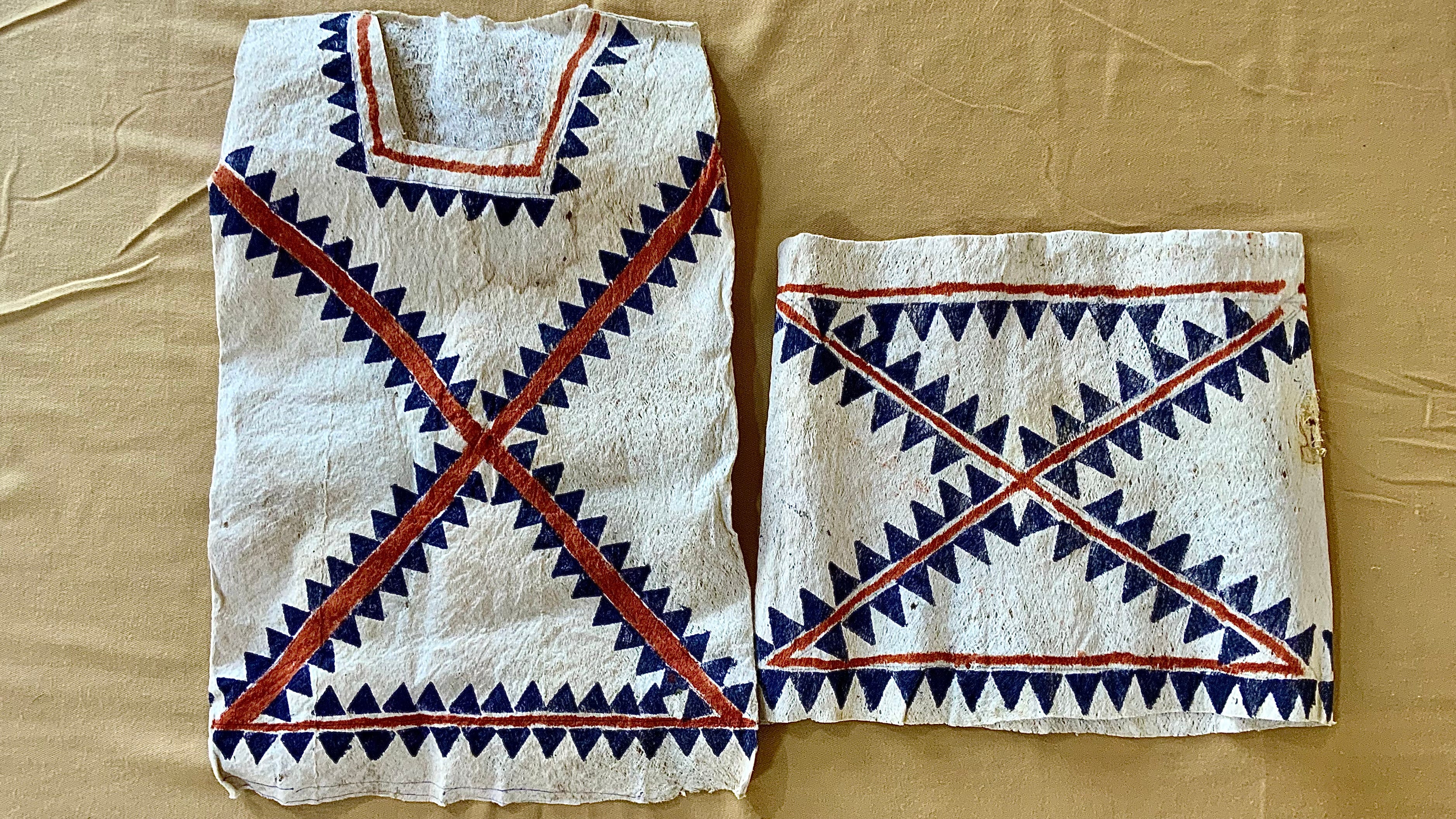
Traditional llanchama clothing for a young woman. Shirt and skirt. Gifted to me on June 5th, 2026 in Bora.
Sana~ni~mUEAh (He who knows wordless wisdom)
The true destination of my quest finally appeared when I met Darwin Campos. His family had been making llanchama for generations. His parents put him through school and raised him entirely with the funds generated from llanchama. This was the true source of llanchama for the region. He welcomed me into his home and introduced me to his mother, sister, and family.
Then, he produced exactly what I had been searching for~ sacred llanchama paper, in a full sheet. It was wonderfully made, the absolute best quality I had ever seen or touched~ very fine, white, stretched, lightly textured, you could see the fibers of bark pounded down~ a perfect paper.
Darwin told me about the process, about the immense work involved, and the generations of skill that had been passed down through his family. He spoke about the artists that would come purchasing paper, the sheer difficulty of finding the specific sacred tree, and much more. Eventually, we exchanged information, and he said he would gladly ship me paper from Boras whenever I asked~ as long as he had some in supply. A perfect contact.
Before I left his home, I spoke with his mother for a while longer about the Bora community and their native language. I asked her if she could look at me and decide what word in her language I should know. She thought deeply for a moment before pronouncing a single word with a syllable I had never heard before in my life.
“Sana-ni-mUEAh” (The mUEAh part is made deep in the throat and comes toward the back of the tongue, almost similar to a gag reflex.)
It was explained to me that this word represents a conscious person with wisdom. Someone who knows. Someone who connects with their skin, their senses, to Source~ who knows reality before words are even formed. Not an intellectual, but a walking wisdom.
Holding that flawless paper in my hands, looking back at the twenty-one fragile bridges I had crossed to get here, I realized that this is exactly what the llanchama invites us to do. It asks us to slow down, to feel the texture of the forest with our skin, and to be a person who connects to the source of things before words ever get in the way. It was a perfect word, and a wonderful gift for the journey.
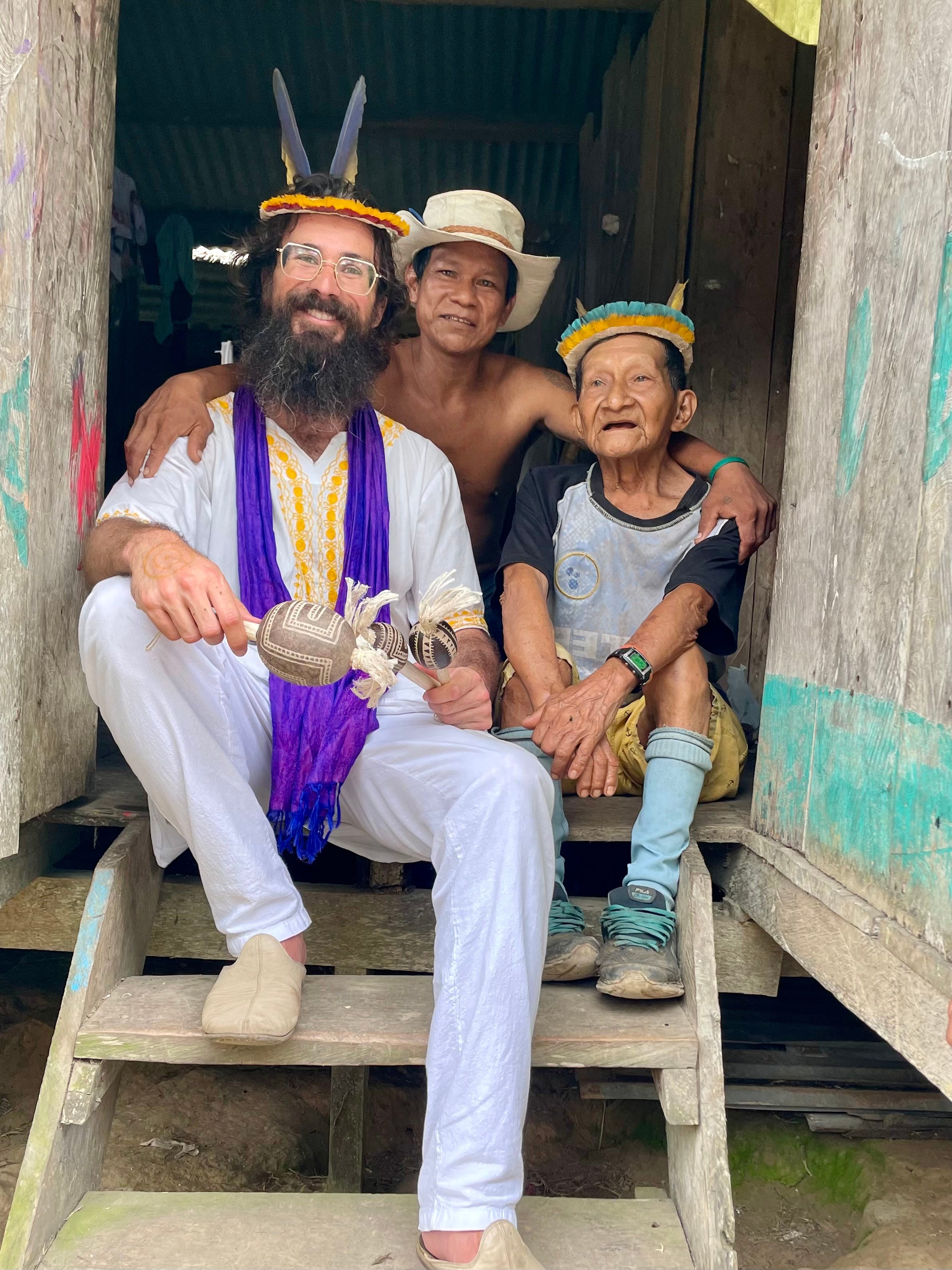
With Don Wahcayu Churay Roque and his son Alexandro. June 5th, 2026 in Bora.
Llanchama Journals
If you would like to purchase a llanchama journal, or have a hand written poem on one please feel free to contact me directly.
You can also obtain one my subscibing to my substack at a particular price point on the sliding scale! I’ll list the options below!
The Sliding Scale: $4 – $999
Pour what you can into the bowl; choose your level of yearly support.
$4+ | A heartfelt, digital thank-you note sent directly to your inbox.
$50+ | A digital thank-you + a physical copy of my book, Stack Stones, mailed to your home.
$100+ | A digital thank-you + a custom poem of your choice from my works, handwritten and mailed to your address.
$200+ | A custom handwritten poem + a premium, colored hardcover edition of Stack Stones.
$400+ | A premium hardcover of Stack Stones, a beautiful Amazonian macaw feather 🪶, and a custom poem written on natural llanchama bark-fiber from the Amazon rainforest, painted with the natural dyes of jungle fruits.
$600+ | All of the $400 gifts + a jar of wild, sustainably harvested Amazonian rainforest honey 🍯 from BQC, alongside a personalized handwritten letter.
$800+ | All of the above + a stunning, original Ayahuasca-inspired painting by Iquitos artist Brian Revellia (see an example below) to hang in your space.
$999 | All of the above + a 52-week creative journey. We will meet for a weekly 30-minute Zoom call dedicated to your creative goals, deep artist feedback, and access to my artist connections. The goal isn’t to teach you to write like me—it’s to empower you to create authentically like you!
Bora paintings by Victor Churay Roque~ assasinated son of Don Willson Boutuna~ shown in “Estéticas Amazónicas Contemporáneas” written by María Eugenia Yllia. Shown to me by the Boutuna family on June 5th, 2026.
Thank you for reading,
I hope you enjoyed!
With love,
Awe World Experiencer
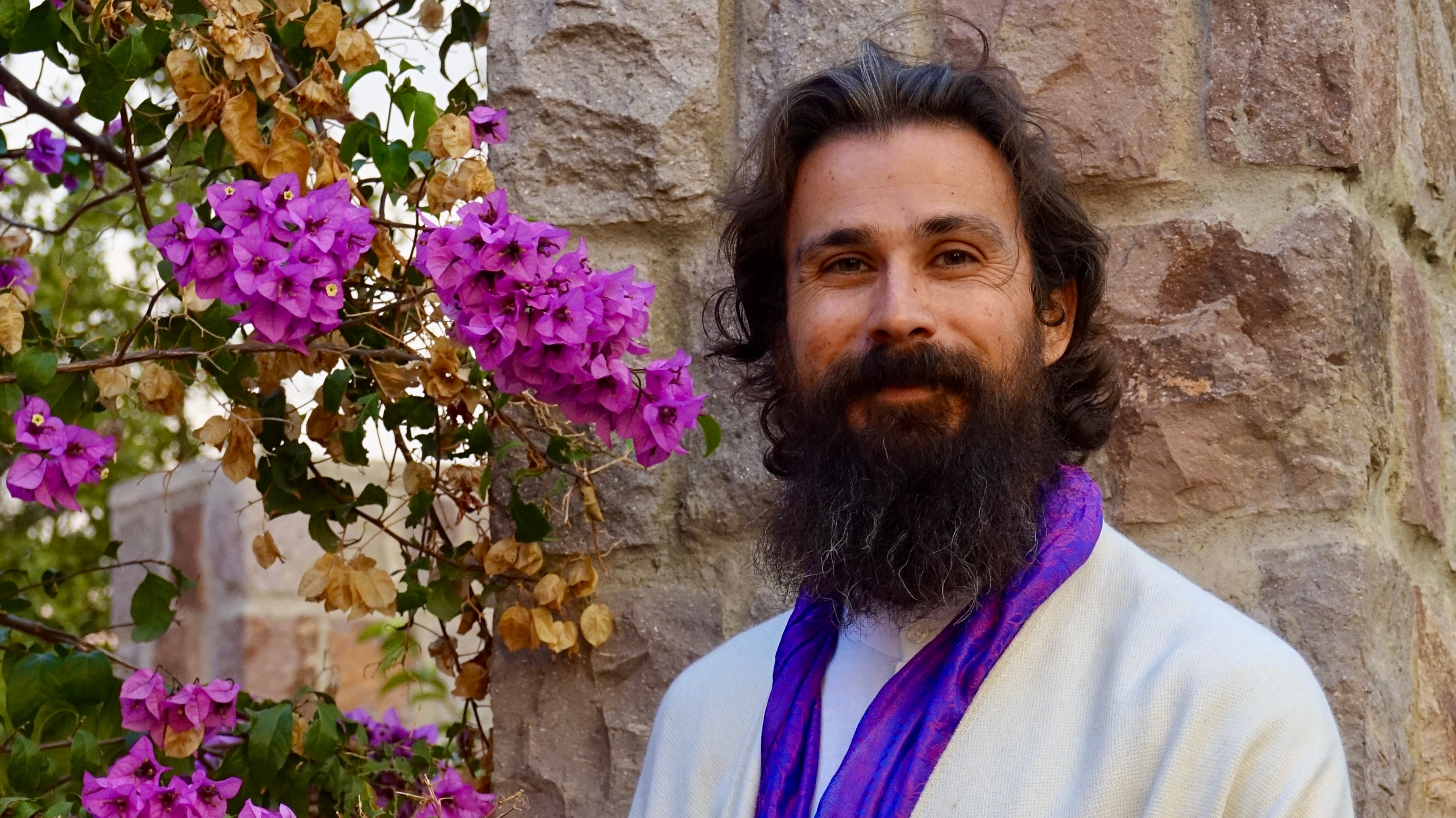
Find my other books on Amazon!
To Donate:
Venmo: AweWorldExperiencer
BuyMeACoffee: buymeacoffee.com/aweworldexperiencer
Social Media:
IG: AweWorldExperiencer
TikTok: AweWorldExperiencer
Wow, what an incredible adventure! I can’t wait to see all the fun things you get up to with the highly prize sacred paper